What Are the Supportive Treatments After Hair Transplantation? Hair transplantation is one of the most effective methods offering a permanent solution to hair loss and thinning problems. However, a successful hair transplantation process is not limited to the day of the operation. Supportive treatments applied after transplantation ensure that the hair follicles take root healthily and increase the effectiveness of the transplantation. In this article, we will examine in detail what supportive treatments are available after hair transplantation, why they are important, and which methods are more effective.
The Importance of the Post-Hair Transplant Process
Hair transplantation, whether performed using techniques such as FUE, DHI, or Sapphire, requires the first few months to be critical for successful results. During the post-transplantation period, hair follicles are delicate, and if proper care and treatments are not applied during this process, the growth of new hair may be negatively affected. This is where supportive treatments come into play. These treatments increase blood circulation to the hair follicles, nourish the scalp, and help hair strands grow healthier.
Why Are Supportive Treatments Used After Hair Transplantation?
Supportive treatments aim not only to make hair grow faster, but also to strengthen existing hair. This makes it possible to achieve denser, thicker, and healthier hair in the transplanted area. Additionally, it helps reduce complaints such as hair loss, itching, or dryness that may occur in some individuals after hair transplantation.
Main objectives:
Increase blood circulation to hair follicles
Moisturize and nourish the scalp
Ensure new hair grows stronger
Slow down existing hair loss
- Minimize irritation and flaking that may occur on the scalp
Supportive Treatment Methods After Hair Transplantation
1. PRP (Platelet-Rich Plasma) Therapy
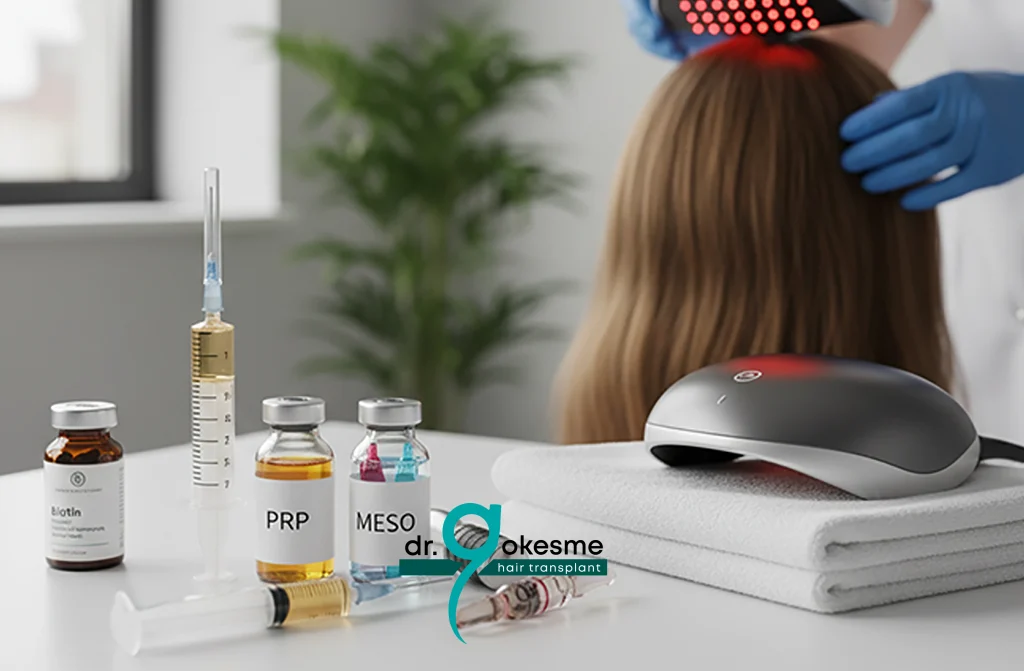
PRP is one of the most commonly used supportive treatment methods after hair transplantation. A sample taken from the patient’s own blood is centrifuged to obtain platelet-rich plasma. This plasma is injected into the scalp to nourish the hair follicles and promote rapid healing. PRP treatment is usually started from the first month after hair transplantation and is repeated in several sessions.
Advantages of PRP:
- Increases the retention rate of hair follicles
- Supports faster and healthier hair growth
- Accelerates the healing of the scalp
2. Mesotherapy
Mesotherapy is a method that involves directly injecting beneficial substances for hair, such as vitamins, minerals, amino acids, and growth factors, into the scalp. Mezotherapy treatments after hair transplantation deliver the nutrients needed by the transplanted area directly to the roots. This results in thicker, shinier, and more resilient hair strands. Mezotherapy is typically administered in several sessions spaced 2-3 weeks apart. Its effectiveness increases when combined with PRP.
3. Laser Therapy (Low-Level Laser Therapy – LLLT)
Low-level laser therapy (LLLT) stimulates hair follicles by increasing energy production in the cells of the scalp. This method accelerates blood circulation, increases oxygenation of the scalp, and supports stronger hair growth. Laser therapy is typically administered in several sessions per week.
4. Topical Lotions and Serums
Special shampoos, lotions, and serums used after hair transplantation as recommended by a physician nourish hair follicles, moisturize the scalp, and reduce irritation. Topical products containing minoxidil, in particular, can slow down existing hair loss while promoting stronger hair growth in the transplanted area. However, such products must be used under the supervision of a specialist.
5.Vitamins and Dietary Supplements
After hair transplantation, ensuring the body has sufficient vitamin and mineral support accelerates the healing process. Vitamins such as biotin, zinc, iron, vitamin D, and B12 are particularly important for hair health. These vitamins can be taken as supplements or through diet. However, since each patient’s needs are different, supplements should only be used under a doctor’s recommendation.
6. Ozone and Oxygen Therapy
In recent years, ozone and oxygen therapies applied after hair transplantation have been shown to increase oxygenation of the scalp, thereby helping to nourish the hair follicles more effectively. These methods can support the healing process and promote healthier hair growth.
When Should Supportive Treatments Begin?
The right time to start supportive treatments after hair transplantation varies depending on the transplantation technique used, the individual’s hair and skin structure, and the healing process. Generally:
- After the first month for PRP and mesotherapy
- After the initial washes for laser treatment
- Topical products can be started immediately or after a few weeks, depending on the doctor’s recommendation.